
SYLTEC - Company

SYLTEC is a company that provides comprehensive engineering and technology consulting services, delivering high value-added solutions tailored to the needs of our clients.

We develop disruptive solutions that integrate advanced technology to transform key sectors such as industry, healthcare, and tourism & cultural heritage. Our mission is to generate real impact through the application of artificial intelligence, extended reality, and process automation, delivering tools that not only innovate but also provide direct value

In the industrial field, we focus on process optimization, intelligent automation, with the aim of reducing execution times, which translates into cost savings and increased productivity.
In healthcare, we apply cutting-edge technologies for the early detection of diseases and the development of intelligent virtual assistants.
In tourism and cultural heritage, we create immersive and interactive experiences that bring knowledge closer to diverse audience.

SYLTEC is part of the Digital Innovation Hub DIHBU, with which it actively collaborates in digital transformation and artificial intelligence initiatives. One example is the AI-MODE project, where together with DIHBU we are developing a generative AI-based virtual assistant to optimize industrial operations.

Its main role will be to provide the testing environment (PROHIMA’s factory in Barcelona), where the solution will be tested. It will coordinate the testing and verify whether it meets the requirements for prototype validation. In addition, DIHBU will disseminate the project’s progress and results, thus supporting its scalability and adoption by new companies within its ecosystem.

PROHIMA - Company

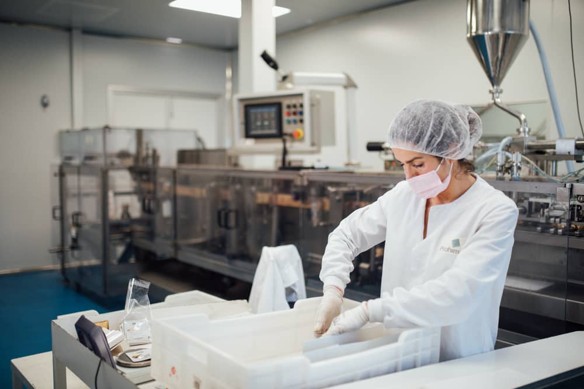
PROHIMA is a manufacturing company specialized in the packaging of wipes and single-dose products for sectors such as cosmetics, perfumery, pharmacy, and parapharmacy. With more than 40 years of experience, it offers individual packaging solutions for liquids, gels, and creams, ensuring quality, innovation, and confidentiality in every project.

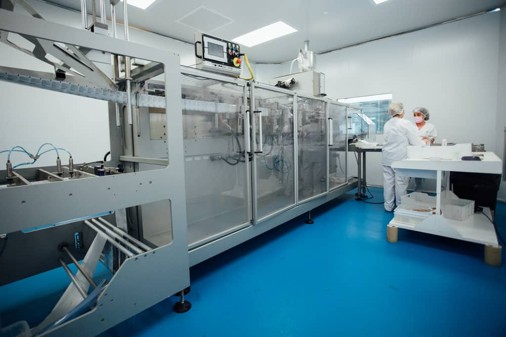
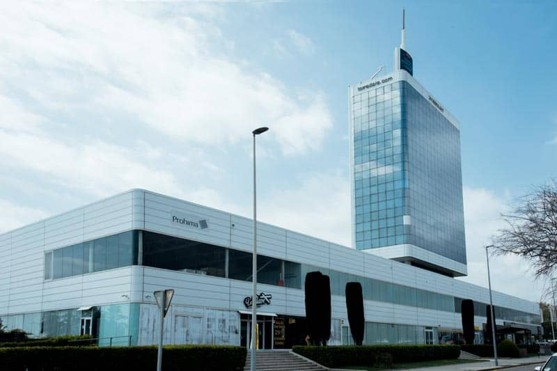
Within the framework of the project, PROHIMA’s factory in Barcelona will be the site for the prototype implementation and will serve as the industrial demonstrator, validating the solution in a real production environment.
EXPERIMENT OVERVIEW

OVERVIEW

SYLTEC, in collaboration with DIHBU, is developing an intelligent virtual assistant tailored for the manufacturing industry.
The system focuses on two key areas: agile onboarding of new operators and incident resolution.
It leverages open-source Large Language Models (Llama3, Qwen3, Gemma3…) combined with Retrieval Augmented Generation (RAG) to provide contextual and accurate guidance.
The assistant will be integrated into the OVOS platform, deployed through Docker containers, and accessed via a lightweight touch-based interface supporting both voice and text interaction.
The outcome will be a validated prototype in an industrial setting, demonstrating the efficiency of AI-driven assistance in reducing training time and supporting complex processes.

CHALLENGES

  1. Complex onboarding processes in manufacturing environments, requiring significant time and supervision.
  2. Limited AI tools for SMEs that deliver contextualized and reliable support for incident resolution.
  3. Knowledge fragmentation, as operational information is dispersed across manuals, documents, and informal communication.
  4. Integration barriers, since combining LLMs with industrial data and workflows can create technical and usability challenges.
  5. User adoption risks, requiring an interface that is simple, intuitive, and adapted to industrial devices.

OBJECTIVES

  1. Develop an AI-based assistant that supports onboarding and incident resolution in manufacturing.
  2. Provide enriched interaction (voice and text with visual diagrams).
  3. Design a custom, lightweight interface optimized for industrial touch devices.
  4. Ensure integration with existing platforms (OVOS, Docker) to guarantee scalability and replicability.
  5. Validate the system in a real industrial environment, achieving measurable improvements in accuracy, efficiency, and user satisfaction.


EXPERIMENT IMPACT

EXPECTED RESULTS (KPIs)

  1. ≥80% accuracy in AI-generated answers (relevance, correctness, context).
  2. ≤15% hallucination rate, ensuring reliability in industrial use cases.≥25% reduction in onboarding and incident resolution time, improving productivity.
  3. Development of a functional prototype reaching TRL 6–7, validated in a real manufacturing plant.
  4. Demonstrated replicability and scalability of the assistant for other SMEs and industrial contexts.


AS-IS SITUATION

Currently, onboarding and incident resolution activities in SMEs rely heavily on manual processes and experienced operators.
Training new employees is time-consuming, often taking weeks before reaching operational efficiency.
Operational knowledge is fragmented across paper manuals, digital documents, and informal communication between workers, leading to errors and inefficiencies.
Existing AI platforms are underutilized, and SMEs lack practical solutions that can be easily integrated into daily workflows without high costs or technical barriers.

TO-BE SITUATION

Onboarding more streamlined and effective
Skill Assessment + voice interview with OVOS
Increased trainee satisfaction
Higher engagement, higher attention

Training with real-time, voice-activated support for practical sessions
Trainees focused while getting guidance and feedback
Reduction of errors and enhanced training experience

EXPERIMENT WORK PLAN