conAI4Main

EXPERIMENT OVERVIEW

EMDIP, manufacturing SME, is a service provider for the high-precision metal cutting sector, currently in need of a very efficient anomaly detection process. The company’s main challenge is to detect anomalies as soon as they appear, since an incorrect cut cannot (usually) be repaired and it produces very costly waste. Traditional visual (camerabased) inspection anomaly detection methods are not efficient enough since they are usually searching for anomalies in the cut, which is already too late because 1) there is already quality damage provided to the metal sheet and 2) it is very challenging due to fume produced in the cutting process. Therefore, a solution for this challenge would be to detect the problems before they escalate in the cutting process. As a part of the Industry4.0 journey, EMDIP already implemented an advanced anomaly detection system (D2Port) which uses deep learning to detect anomalies as soon as they appear and enables an efficient alarming system, offered by Nissatech, the  experiment’s IT provider.

Although very accurate in detecting problems, D2Port does not provide enough details to solve identified challenges, a common problem for most anomaly detection systems. Indeed, to resolve an anomaly efficiently, it is important to know the context in which the problem emerges, as well as the corresponding experience/best practices, which are usually provided in various semistructured and unstructured data sources related to the maintenance process, like the reports from the maintenance activities or the maintenance manuals (to name but a few). Moreover, the exploration process should be organized as a structured conversation, enabling deep dive into the problem resolution process.

ConAI4Main will support:

  1. proper contextualization of the alarms, enabling a conversation for better understanding the alarm situation (incl. root causes), based on available information;
  2. supporting a dialogue for questioning the situations to discover what are possible impacts of the alarm, which is done through assisted querying in LLM, based on the data collected in the anomaly detection system;
  3. assisting in the reparation/resolution process itself, by providing hand-on instructions, as well as in documenting the process (feedback).

Big challenge which manufacturing is facing nowadays is silo-based understanding of the problems which happen in the production        

Context of a problem is constrained on the selected set of information, although there might be other relevant sources available in the company

e.g. an anomaly detection system takes as inputs camara-based information, raw material, process parameters for detecting an anomaly, but for understanding the anomaly (its impact, urgency, costs and finding an optimal solution – how to recover from the anomaly) it could be important to get information/knowledge/experience about the worker, or client …

Objective 1: 

New concept of the Conversation AI-based Digital Assistant for predictive maintenance

  • Provide conceptualization of the system based on the requirements from real industry settings

Objective 2:

Implementation of the conAI4Main Digital Assistant for predictive maintenance

  • Development of required modules and integration in a reliable and scalable solution (software as a service)

Objective 3: 

Validation of the conAI4Main Digital Assistant in real industrial settings

  • Provide PoC for predictive maintenance in metal cutting industry


The approach will be tested in a real manufacturing setting in the domain of metal-cutting, in the EMDIP factory (Nis, Serbia), which is well-equipped for the required experimentation.

Target users: maintenance engineers, quality control managers 

EXPECTED IMPACT

EXPECTED IMPACT

Manufacturing SME will benefit from extending the existing anomaly detection system with a Digital Assistant which will improve the resolution of unusual alarm situations, esp. for novice operators. We expect that the improvement will be for at least 75% in the first year (measured by decreasing time and the success of the alarm resolution). In addition, the scrap rate should be improved for at least 25%. IT provider is recognized provider of various services for manufacturing companies. This proposal will support the services related to predictive maintenance, which will be extended with an innovative Digital Assistant support based on Conversation AI. This extension provides a significant competitive advantage and even enable an international success (see Exploitation plan). DIH partner will provide by extending own service offering in the new domain (DIA).

Moreover, general approach in embedding Conversation AI in the exploration process (Digital Assistant, DA) can be applied beyond the predictive maintenance process. For example, a similar Digital Assistant can be used in the Quality Monitoring and Control process, where the quality of the process and product is observed and the DA will support the process of resolving quality issues, detected in the process/product.

In general, there is a huge impact of our position in Industry 5.0. by enhancing Collaborative Intelligence

Technology impact

More general, proposed solution can be interpreted as an AI-based process behaviour-related contextualization of data analytics methods, which provides a higher level interpretation of the data analytics results and offers corresponding improvements. It can be an important driver for new generation of Conversation-AI-based process monitoring, analysis and control tools, which are focused on the dialog-driven analysis of process value streams and support lean-driven process improvement (and digitization)

In general, proposed approach can impact the digitisation process through reducing time and enabling better decision making by applying AI in the case of dynamic maintenance situations, like tool wear cases. Indeed, one of the main problems in digitisation is poor data/process quality/analysis and proposed approach resolves that bottleneck.

Economic impact

The market opportunity for this kind of systems are huge. Indeed, from the exploitation point of view the main outcome can be treated as an AI and DA-based Predictive Maintenance solution. Global Predictive Maintenance Market size was valued at USD 5.77 Billion in 2022 and is poised to grow from USD 7.57 Billion in 2023 to USD 66.46 Billion by 2031, at a CAGR of 31.2% over the forecast period (2024–2031).

Based on the current PoCs we will start with Equipment/Process monitoring and control, widely recognized as important techniques for improving quality and (proactively) detecting abnormal behaviour, leading to more efficient approaches for process improvement (e.g. detecting some problems ahead of time). As being early on this market, we expect to have a share of 10% of manufacturing SMEs, focusing on central Europe domain in first year

Other impact

Proposed solution offers a new better way for resolving possible issues (anomalies), making the workspace less stressful and more engaging for workers. This will lead to a more employee satisfaction, having a huge societal impact. Second, this solution will offer new services which will be managed by new types of workers, creating new job opportunities.

By reducing anomalies, we pave the way for sustainable manufacturing that minimizes negative environmental impacts and consumption of energy, natural resources, while being socially responsible and economically viable.

Circ-shoe

EXPERIMENT OVERVIEW

During the footwear manufacturing process, a significant volume of EVA (Ethylene-Vinyl Acetate) waste accumulates (sprues, textile cuttings, non-conforming products), which is often disposed of or sold at a low price instead of being reused. Insufficient real-time control of process parameters and errors in equipment temperature regimes, pressure, or volume lead to defective products, while the lack of automated analytics forces technologists to rely on delayed manual reports, reducing the effectiveness of response to malfunctions. An additional challenge is the increase in energy consumption caused by inefficient heating and cooling regimes.

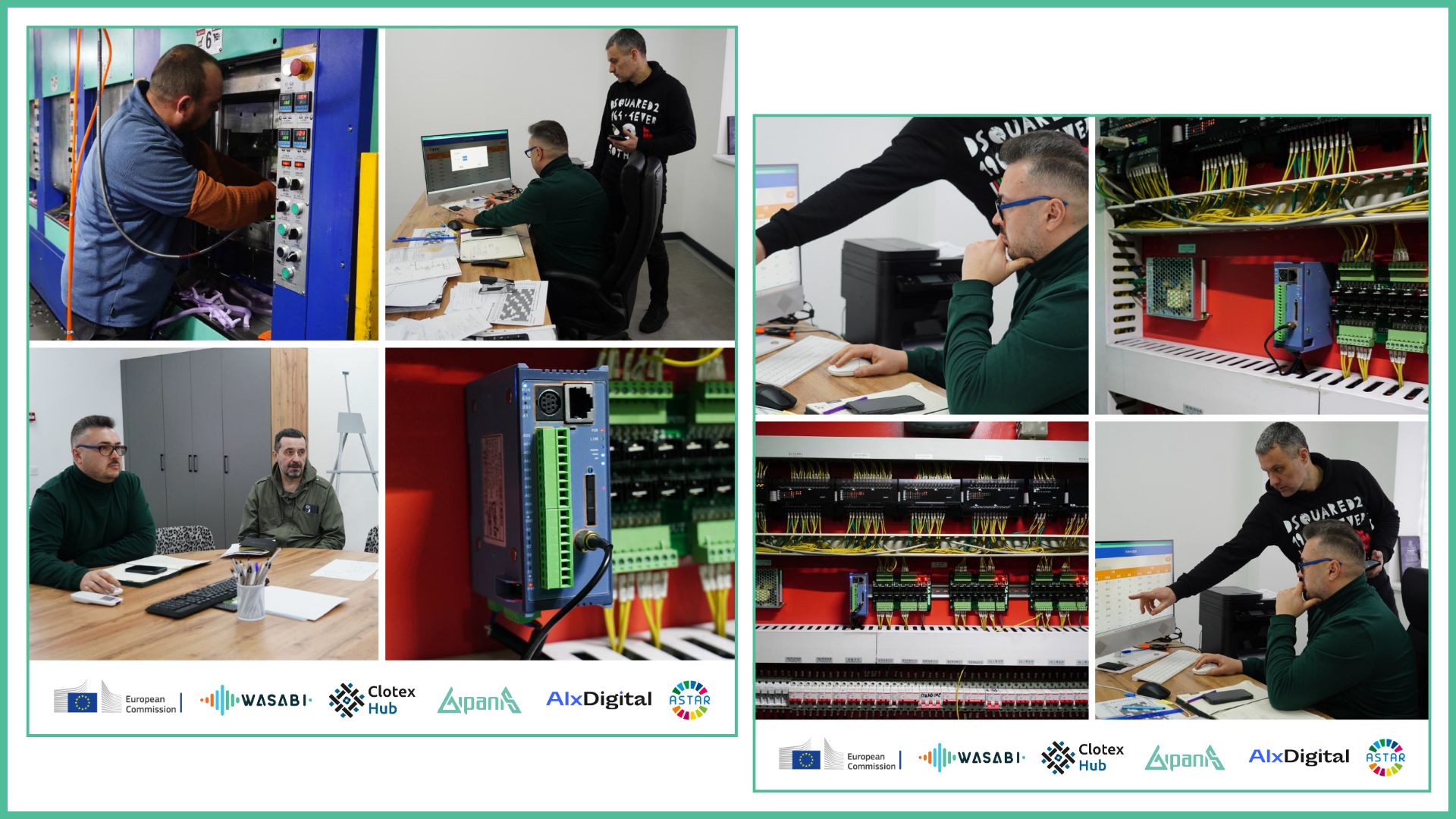
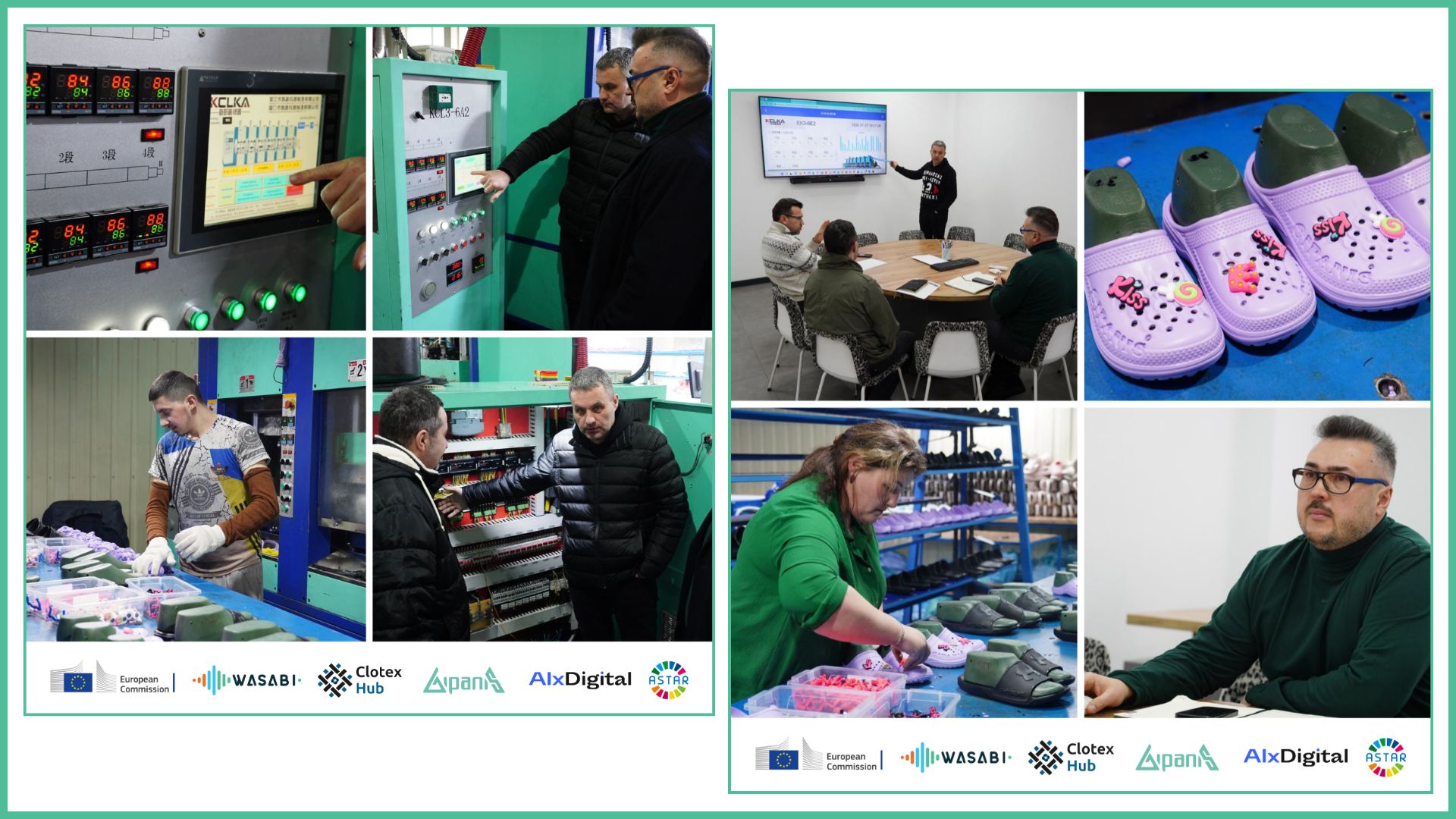
The CIRC-SHOE project is aimed at comprehensively addressing these challenges. The main production line for the experiment is the KCLKA EK3-6E2 injection molding machine, which is used to process EVA polymer into soles, insoles, clogs, boots, and other types of footwear at the manufacturing enterprise LLC “Vzuttia Podillia.” It is on this line that the Digital analytics and forecasting of potential deviations that may lead to defects or overconsumption, as well as management of EVA waste through its identification and systematization for reuse. In addition, AI-WVMA will provide automated notifications to the technological department about equipment malfunctions and deviations in operating modes. Our AI-WVMA tool will also be suitable for other equipment in the light industry, as it is based on universal algorithms for monitoring production parameters (temperature, volumes, energy consumption, defect rates) that are typical for most light-industry equipment and therefore can be easily adapted to various technological processes.

The implementation of AI-WVMA in the company’s production processes will lead to significant improvements. In particular, EVA waste will be reduced by 8–10% through monitoring and reuse of secondary raw materials; production costs will decrease by 5–8% due to process optimization and loss reduction; energy consumption per unit of product will be reduced by 3% through more precise control of molding and cooling regimes; production culture will improve through better plan control, compliance with technological requirements, and rapid response to deviations; product quality will increase and the defect rate will decrease; automated notification of the technological department will occur in 95% of equipment failure cases, reducing production downtime. Overall, this will result in a sustainable environmental effect: reduced waste volumes, lower CO₂ emissions, and compliance with Green Deal principles. The primary beneficiaries of CIRC-SHOE will be the employees of LLC “Vzuttia Podillia” (200 staff members), of whom 15–20 technologists, mechanics, and operators will gain access to the real-time parameter monitoring system. This will enable a reduction in defect rates by 8–10% and a decrease in energy consumption by 3%.

For the company’s management, the expected impact includes a 5–8% reduction in production costs and increased competitiveness of the GIPANIS brand, with a projected export growth of 4–5%.

Secondary beneficiaries will include other SMEs in the light industry in Ukraine and the EU—ranging from hundreds of companies in Ukraine (approximately 510 enterprises) to around 1,000 in the EU. This could lead to a reduction of 1,000–1,500 tons of waste annually, a decrease in defect rates by 9–12%, and an improvement in energy efficiency by 4–6%.

In the Khmelnytskyi region, where more than 1,000 light industry enterprises operate, a multiplier effect is expected: 8–12 companies may implement the DIA within two years, contributing to waste reduction of 8–10% and energy cost savings of 3–5%.

Thus, CIRC-SHOE has the potential not only for local but also for systemic impact, establishing a new standard for waste management in footwear and textile manufacturing. The project transforms the approach from disposal to valorization of EVA waste, making production more sustainable, flexible, and competitive.

The CIRC-SHOE experiment addresses a set of interlinked operational, technical, data, and sustainability challenges typical for EVA footwear production based on injection moulding. At the host SME (ТОВ «Взуття Поділля», TM GIPANIS), key production outcomes—output volume, scrap and defect rates, temperature stability of moulds/injector, and energy consumption—are strongly influenced by machine settings and process conditions that can fluctuate during shifts. When deviations are detected late, the result is avoidable waste: EVA runners/sprues, nonconforming parts, and rework that consumes additional time, energy, and raw material.

A core pain point is the lack of real-time visibility and early warning. Process data is often monitored locally at the machine or captured manually, while consolidated reporting is delayed and fragmented. This creates a “reaction gap”: technologists and mechanics learn about drift in temperature regimes, oil temperature, injection parameters, or abnormal energy patterns after defects have already accumulated or a machine has already operated inefficiently for hours. In practice, this leads to unstable quality, higher defect rates, and additional material losses, especially when multiple product types (soles, insoles, sabo, boots) are produced under varying mould and cycle conditions.

Another challenge is inefficient use and low-value handling of EVA waste. In footwear manufacturing, EVA waste streams (sprues/runners, trimming residues, nonconforming products) are frequently disposed of or sold at low value because there is insufficient traceability of waste origin, composition, and quality, and limited operational support for systematic reuse. Without structured accounting and analytics, it is difficult to identify which waste fractions are suitable for safe reintegration into production, how reuse affects quality, and what process adjustments are needed to maintain consistent output.

Energy consumption is a further critical issue. EVA injection moulding is energy intensive due to heating/cooling cycles, temperature maintenance, and downtime losses. When heating and cooling regimes are not optimized—especially under frequent changeovers or suboptimal temperature control—energy per unit increases and indirectly raises the carbon footprint of each pair produced. For SMEs facing volatile energy prices and competitiveness pressure, even small percentage improvements translate into meaningful cost savings and resilience.

The experiment also addresses a data-related and technical integration barrier: industrial data exists but is not turned into actionable intelligence. Sensor and controller signals (temperatures, cycles, energy readings, alarms) are typically stored in proprietary formats or remain unused beyond basic monitoring. SMEs often lack the tooling and expertise to collect time-series data reliably, normalize it, and apply descriptive/predictive analytics to detect anomalies and prevent defects. As a result, decision-making remains heavily dependent on individual experience, and process optimization is not reproducible across shifts or product batches.

Regulatory and trust considerations matter as well, especially as SMEs increasingly align with EU sustainability expectations and digital governance. Even when the system focuses on production data rather than personal data, it must demonstrate robust cybersecurity, role-based access, auditability, and transparent human oversight. In addition, any AI-enabled support tool must be deployed in a way that aligns with GDPR principles and a risk-based approach consistent with the EU AI Act—avoiding autonomous control of equipment, ensuring clear user awareness of AI involvement, logging actions, and enabling escalation to responsible staff in critical cases.

Finally, the challenge has a broader sustainability and market relevance. Reducing EVA waste and improving energy efficiency supports circularity goals and improves the environmental profile of products—an increasingly important factor for supply chains and customers seeking “greener” manufacturing. For Ukrainian and EU footwear SMEs, a replicable digital assistant that reduces scrap, energy use, and process variability can become a practical pathway to strengthen competitiveness while advancing Green Deal–aligned production practices.

Objective 1: 

The first objective is to design, implement, and operationalize the AI Waste Valorization & Monitoring Assistant (AI-WVMA) as a Digital Intelligent Assistant (DIA) integrated into the EVA injection moulding line at LLC «Vzuttia Podillia». The system will collect and process time-series production data (output, defect rate, temperature regimes, energy consumption, and related parameters), provide real-time dashboards and alerts, and apply descriptive and predictive analytics to detect deviations and support timely human decision-making—without autonomous control of equipment.

Objective 2: 

The second objective is to achieve measurable improvements in production efficiency and sustainability by using AI-driven analytics to optimize process parameters and enable structured EVA waste valorization. Within 12 months, the experiment aims to reduce EVA waste by 8–10%, decrease energy consumption per unit by at least 3%, increase the share of reusable EVA waste to at least 8%, and lower overall production costs by 5–8% through reduced scrap, improved stability of temperature regimes, and more efficient resource use.

Objective 3: 

The third objective is to validate the technical, operational, and business feasibility of AI-WVMA in a real industrial environment and prepare it for broader deployment via the WASABI ecosystem and EDIH networks. This includes documenting the architecture, ensuring compliance with GDPR and a risk-based approach under the EU AI Act, developing a sustainable exploitation and business model, and publishing the solution as a replicable module that can be adapted by other footwear and light industry SMEs in Ukraine and the EU.

The experiment takes place in the context of high-precision manufacturing. These environments require consistent procedures, careful handling of materials, and adherence to strict quality and safety requirements. Workers often perform repetitive or fine-motor tasks that demand sustained concentration and static postures. In many cases, the use of protective equipment or specialised work attire further limits conventional interaction methods such as touch-based interfaces, reinforcing the need for accessible and non-intrusive interaction modalities.

The pilot is carried out together with our manufacturing partner who is experienced in regulated medical device production environments. The experiment focuses on an assembly process involving wearable devices and sensitive electronic components. It examines how a conversational Digital Intelligent Assistant (DIA) can be introduced as a supportive layer within existing workflows. Particular attention is given to privacy-by-design principles, user acceptance and maintaining a non-intrusive interaction model.

Primary users are assembly workers performing detailed tasks, while stakeholders include technical teams and organisational decision-makers interested in practical approaches to human-centred digitalisation. The exploration seeks to better understand how such assistants are perceived in everyday work contexts and what conditions support meaningful adoption.

EXPECTED IMPACT

EXPECTED IMPACT

The expected impact of the CIRC-SHOE experiment is technological, economic, and environmental, with measurable improvements at the level of production efficiency, waste reduction, and energy performance. Success will be determined by comparing baseline production indicators (collected during WP1) with post-implementation results after full deployment and pilot validation (WP3–WP4), using clearly defined KPIs.

At the operational level, the primary expected impact is improved process stability and reduced defect rates in EVA injection moulding. Based on historical internal production data, the current defect rate in EVA production fluctuates within a defined baseline range (to be formally documented during WP1). Through real-time monitoring, anomaly detection, and predictive alerts, the experiment aims to reduce EVA-related waste and defects by 8–10% within 12 months. Success will be measured through monthly scrap reports, percentage of nonconforming products, and reduction in unplanned parameter deviations per shift.

In terms of resource efficiency and sustainability, the experiment aims to reduce energy consumption per unit of output by at least 3%, measured in kWh per pair (or per production batch). Baseline energy intensity will be established from historical utility and machine-level data. Additionally, the project targets an increase in the structured reuse of EVA waste to at least 8% of total EVA residues, transitioning from low-value disposal toward controlled reintegration into production where quality allows. Environmental impact will be assessed through reductions in material waste (kg/month), energy intensity (kWh/unit), and estimated CO₂ emissions linked to electricity consumption.

For end users—technologists, operators, and mechanics—the expected benefit is improved visibility and faster decision-making. Instead of relying on delayed manual reports, staff will receive real-time dashboards and automated alerts in at least 95% of parameter deviation cases. Success will be measured through system log data (alert accuracy and response times), reduction in reaction lag between deviation detection and corrective action, and qualitative feedback collected from users during pilot evaluation. Improved transparency is expected to reduce unplanned downtime and improve adherence to technological regimes.

From a business perspective, the reduction in scrap and energy use is expected to decrease production costs by 5–8%, strengthening the competitiveness of TM GIPANIS in both domestic and EU markets. This will be evaluated through cost-per-unit analysis before and after implementation. For the IT partner and DIH, success will also be measured by the readiness of the solution for replication: completion of technical documentation, publication within the WASABI ecosystem, and demonstrated transferability to at least one additional SME use case scenario.

Overall, the experiment will be considered successful if it demonstrates:

  • ≥5% reduction in EVA waste,
  • ≥3% reduction in energy consumption per unit,
  • ≥8% structured reuse of EVA residues,
  • ≥95% automated detection and notification of critical deviations,
  • measurable cost reduction (5–8%), and
  • validated readiness for replication across light industry SMEs.

These quantitative KPIs, combined with user validation and documented compliance with GDPR and a risk-based AI governance approach, will confirm that CIRC-SHOE delivers tangible industrial, environmental, and strategic value.

Diamond

EXPERIMENT OVERVIEW

The DIAMOND experiment (Digital Intelligent Assistant for Additive Manufacturing Optimized by AI-based moNitoring for Decision-making) addresses a critical gap in the Laser Powder Bed Fusion (LPBF) additive manufacturing process: the inability to systematically exploit in-situ monitoring data for real-time quality control and decision-making. While modern LPBF machines are equipped with advanced sensors and monitoring software capable of collecting vast amounts of process data, the interpretation and analysis of this data remain largely manual, expert-dependent, and reactive. Defects such as porosity, residual stresses, local overheating, and geometric distortions are typically identified only after the build is completed, leading to material waste, energy inefficiencies, and costly rework.

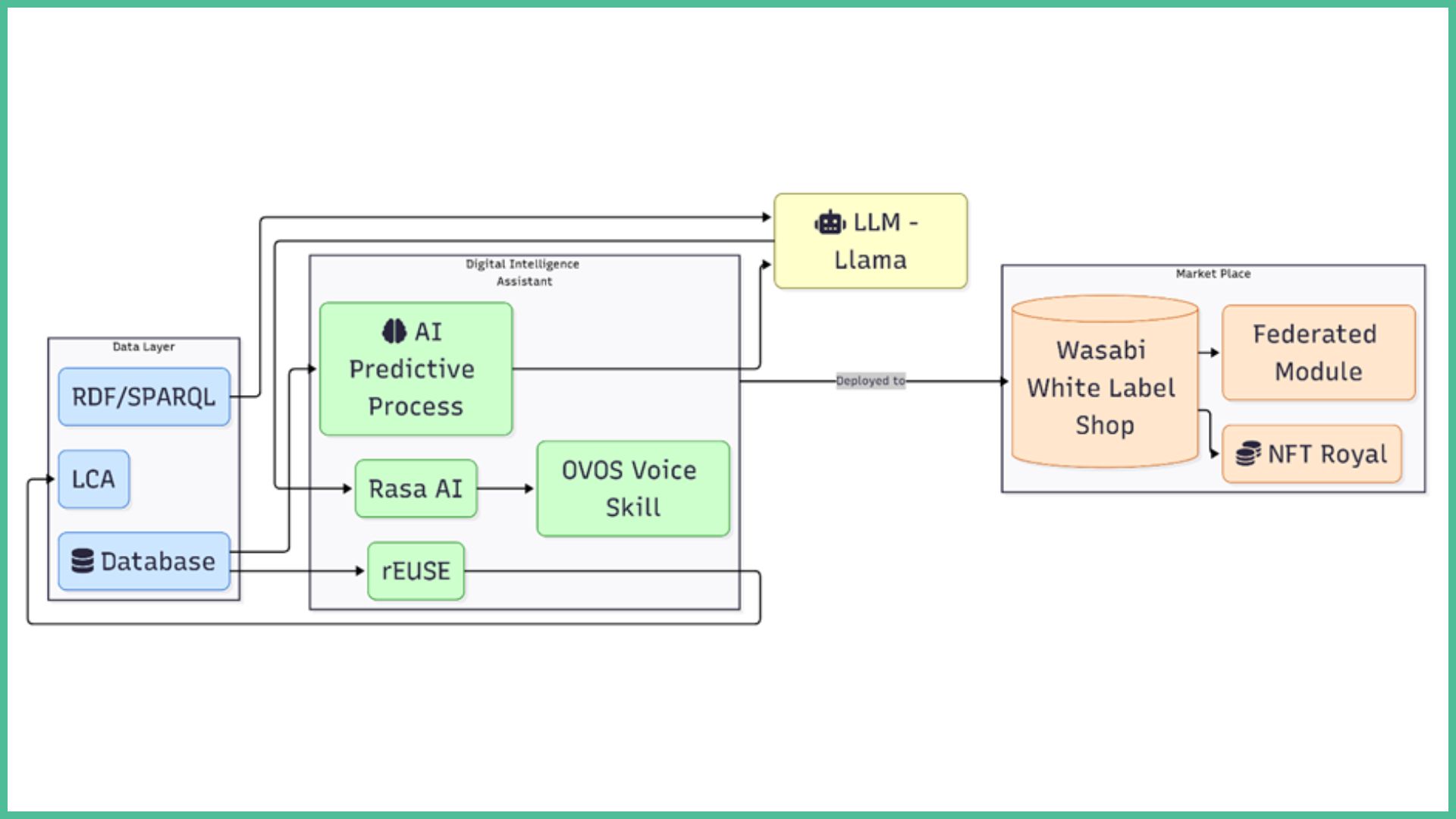
The experiment proposes the development of a Digital Intelligent Assistant (DIA) that integrates AI-driven data analysis, federated learning, and conversational interfaces to enable automated, structured, and scalable interpretation of LPBF monitoring data. The solution is built upon an open-source Large Language Model (LLM) trained on the LPBF ontology, a RASA-based conversational AI for dialogue management, and OVOS voice skills for natural language interaction. Together, these components form an operator-friendly assistant that translates complex sensor data into clear, actionable insights, supporting process control, anomaly detection, and data-driven decision-making during printing.

The experiment is structured in two main phases. The first phase focuses on data collection and generation of a training dataset, including controlled test builds designed to intentionally introduce specific types of defects (such as pores, delamination, and localized overheating zones) as well as historical production data from failed and successful builds. The second phase involves dataset-supported training and validation of AI algorithms for understanding and predicting failure mechanisms and quality deviations, alongside the development and deployment of the DIA. The physical and material properties of the printed parts will be experimentally characterized, and these measurements will be used to validate and refine the predictive models embedded within the software.

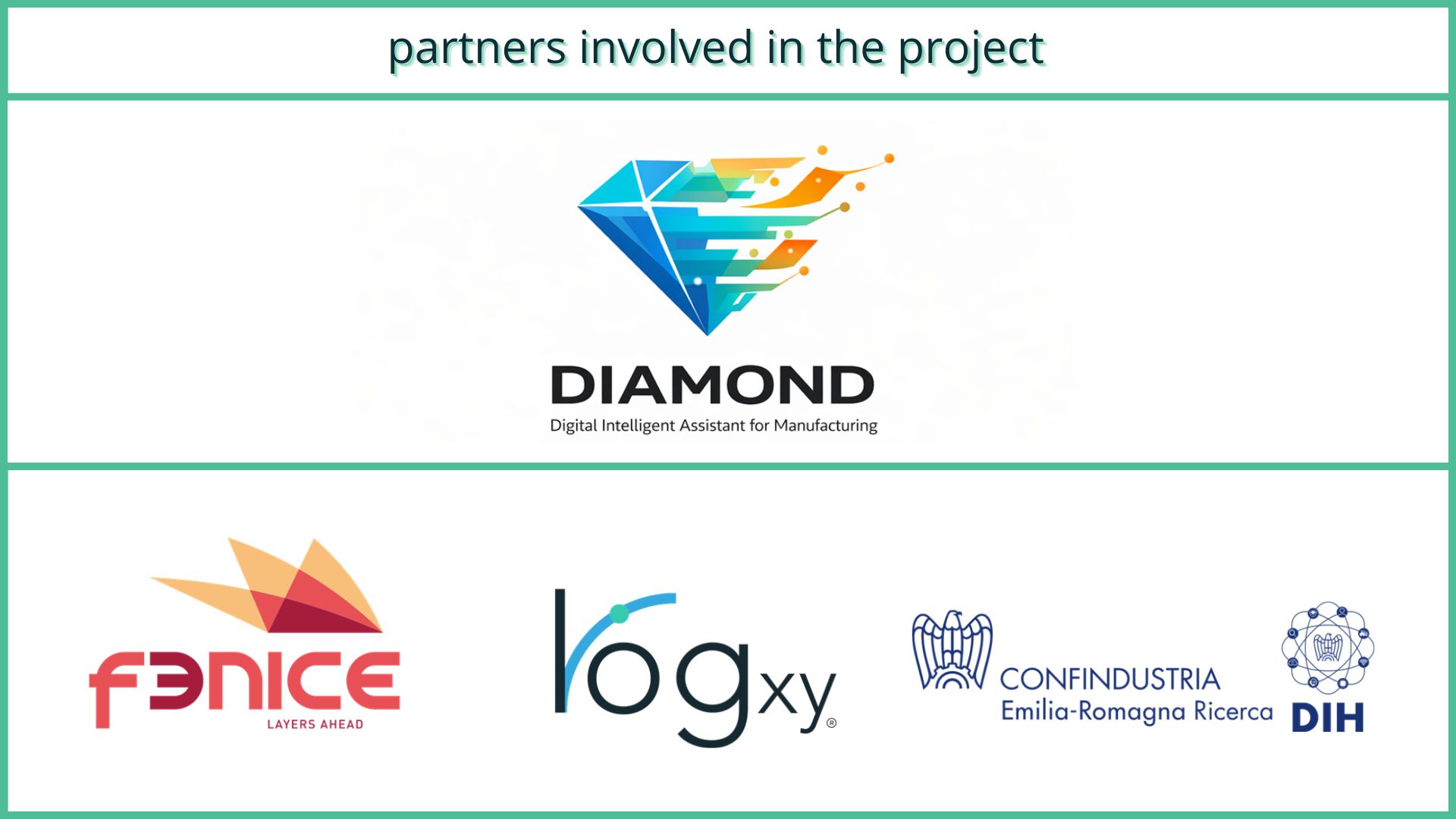
The consortium is composed of three complementary partners. f3nice Srl, an Italian SME specialized in metal additive manufacturing and LPBF, acts as the industrial end user and validation partner, providing real production data and testing the DIA in a real manufacturing environment. Log XY Srl, an IT solution provider, is responsible for the software orchestration of the DIA, the development of the trustworthy AI algorithms, and the integration with the WASABI White Label Shop (WWLS) marketplace. Confindustria Emilia-Romagna Ricerca (DIH-ER), a certified Digital Innovation Hub, leads the dissemination, communication, and exploitation strategy, leveraging its network of over 6,300 regional companies to ensure broad adoption and technology transfer.


The DIA solution will be deployed via the WASABI Docker Compose framework and distributed through a fully operational WWLS instance, enabling SME evaluation, marketplace integration, and functional validation. The experiment spans 12 months, moving through the following phases: data collection and experimental analysis (month 1 to 3), prototype development and validation (month 1 to 7), the DIA chatbot development (month 5 to 10), testing in real environments (month 9 to 12), and marketplace integration (months 11 and 12). The experiment is fully aligned with the WASABI 2nd Open Call objectives, contributing to AI-enhanced manufacturing through the development of trustworthy, privacy-preserving, and interoperable digital tools for the shop floor.

In Additive Manufacturing, particularly Laser Powder Bed Fusion, improving part quality and reliability while reducing build failures remains a major industrial challenge. Part properties are heavily influenced by process dynamics, and deviations in parameters such as laser power, scan speed, or environmental conditions can lead to defects including porosity, residual stress accumulation, overheating, and geometric distortion. These issues directly affect the mechanical performance and dimensional accuracy of the final components, which is especially critical in high-value sectors such as aerospace and energy.

While commercial in-situ monitoring systems, such as EOS State OT and EOS State Meltpool, are capable of capturing high-frequency images and detecting real-time variations during the melting process through advanced optical sensors like photodiodes and long-exposure cameras, the interpretation and analysis of this data remains predominantly manual. Expert operators are required to identify anomalies or defects, and this reliance on subjective judgement limits scalability, repeatability, and the speed of quality control. Process corrections are typically implemented only after a failure has already occurred, resulting in a reactive rather than preventive approach to quality management.

Another significant challenge lies in the large volumes of in-situ monitoring data generated during each build, which are often underutilized due to the lack of effective analysis tools. The relationships between process data and the final quality of the part are frequently unclear or weak, especially for complex failure modes such as stress-induced cracks or thermal distortion. Current solutions are limited to simple data visualization and storage or rely on qualitative post-process evaluation, without providing the structured and automated analysis needed to extract actionable quality indicators during the printing process itself.

From an operational perspective, the absence of a unified mechanism to translate raw sensor data into clear, actionable insights for operators constrains the ability of SMEs like f3nice to scale LPBF production efficiently, reduce variability between builds, and accelerate parameter optimization for new materials or geometries. In addition, the available monitoring systems operate with limited integration into daily production workflows. This gap between monitoring capability and practical quality assurance represents the core challenge that the DIAMOND experiment aims to address.

Objective 1:

Develop an automated data management and analysis tool for LPBF in-situ monitoring systems that extracts meaningful quality indicators from sensor data and correlates them with physical characteristics of the printed part, such as porosity, residual stress, and geometric deformation. The system will replace the current manual and expert-dependent interpretation workflow with a structured, scalable, and objective approach to quality assessment. The target is to achieve at least a 30% improvement in defect identification accuracy compared to current semi-automated analysis methods, and a 30% reduction in data interpretation time.

Objective 2:

Develop and validate predictive models that link LPBF process signals to final part properties, enabling proactive quality control through real-time anomaly detection during the build process. By integrating these models into the production workflow, the system will allow operators to identify critical process deviations before defects propagate, supporting earlier intervention and reducing the number of failed builds by at least 20%. This shift from post-process diagnostics to operational decision-support represents a fundamental advancement in the management of LPBF quality.

Objective 3:

Deploy an operator-friendly Digital Intelligent Assistant that integrates an open-source Large Language Model trained on the LPBF ontology, a RASA-based conversational AI, and OVOS voice skills into a unified human-machine interaction framework. The DIA will be deployed via the WASABI Docker Compose framework and made available through the WASABI White Label Shop marketplace, enabling SME evaluation and adoption. The assistant will reduce cognitive load for operators, lower the learning curve for new personnel, and support decision-making via natural language interaction with quality indicators, predictive models, and process anomalies.

The DIAMOND experiment operates within the metal Additive Manufacturing sector, specifically targeting the Laser Powder Bed Fusion process. LPBF is increasingly adopted for the production of high-value, complex metal components in sectors such as aerospace, energy, advanced manufacturing, and industrial research and development. These sectors demand strict quality requirements, including tight tolerances on porosity, residual stress, dimensional accuracy, and mechanical performance, making reliable process monitoring and quality control essential.

The experiment will be carried out at the production facility of f3nice Srl, located in Lombardy, Italy. f3nice operates industry-standard LPBF systems equipped with in-situ monitoring solutions, providing a realistic industrial environment for testing and validating the Digital Intelligent Assistant. The operational environment encompasses both controlled experimental builds, designed to introduce known defects and test the response of the AI tools, and real production conditions using historical and ongoing manufacturing data. This dual approach ensures that the solution is validated not only in laboratory-like conditions but also under the variability and constraints of actual production workflows.

The primary target users of the DIA are LPBF machine operators, process engineers, and quality control personnel at f3nice, who will interact with the system through conversational and voice-based interfaces to monitor builds, interpret process data, and receive real-time alerts and recommendations. Secondary stakeholders include SMEs across the Emilia-Romagna manufacturing ecosystem, who will benefit from the replication and adoption pathways facilitated by DIH-ER through workshops, webinars, and one-to-one innovation assessments.

Relevant constraints include the need for compliance with GDPR and the EU AI Act for all data processing and AI-driven functionalities, as well as alignment with ISO/IEC 42001 and EU Trustworthy AI guidelines. The solution must integrate with existing commercial monitoring systems and their proprietary data formats and APIs, and must operate within the security and data governance requirements of an industrial production environment. Data privacy is ensured through federated learning and end-to-end encryption, allowing decentralized validation without the exchange of raw data between partners.

EXPECTED IMPACT

EXPECTED IMPACT

The DIAMOND experiment is expected to generate significant technological, economic, and commercial impact for the consortium partners and beyond. From a technological perspective, the introduction of an advanced tool for the automatic analysis of process data in LPBF represents a substantial step toward more efficient, predictive, and scalable quality control. The system will enable the reduction of failed builds by improving the ability to detect and interpret anomalies in real time, shorten the time associated with the qualification of new materials through structured and guided parameter optimization, and minimize rework and disqualified parts caused by undetected defects in the early stages of production.

The experiment defines clear measurable targets to assess its success. Defect detection accuracy is expected to improve by at least 30% compared to the current baseline, which relies on expert interpretation of post-process data. Data interpretation time is targeted for a reduction of at least 30%, reflecting gains in operational efficiency through automated analysis. Operator productivity is expected to increase by at least 25%, driven by reduced manual supervision time and faster defects localization enabled by the DIA. Quality control costs are targeted for a reduction of at least 20% through the selective replacement of extensive post-process inspections with in-situ AI-based monitoring. The number of failed builds on monitored parts is expected to decrease by at least 20% as a result of proactive anomaly detection and early intervention.

From an economic perspective, these improvements translate into measurable savings in terms of reduced cost of failed prints, lower expenditure on non-destructive testing, and faster development and qualification cycles for new materials and product designs. From a commercial standpoint, the integration of a user-friendly DIA into existing production workflows will facilitate the adoption of advanced monitoring systems even by non-expert operators, expanding the potential market to a broader user base and strengthening the partners’ positioning as providers of innovative solutions in the field of additive manufacturing.

The dissemination and outreach activities led by DIH-ER are expected to reach at least 120 SMEs through communication and dissemination channels, with at least 40 SMEs actively participating in workshops and webinars, and at least 3 qualified adoption leads generated during the project duration. At least 5 dissemination actions will be carried out at the European level through channels such as the Enterprise Europe Network, COST Action EUMINE, and the WASABI platform. The solution will be integrated into the WASABI White Label Shop marketplace, delivered as a modular and interoperable software suite, and designed for extension to other manufacturing domains through flexible AI models and federated learning architecture, ensuring long-term sustainability and scalability beyond the experiment itself.

Probio-AI

EXPERIMENT OVERVIEW

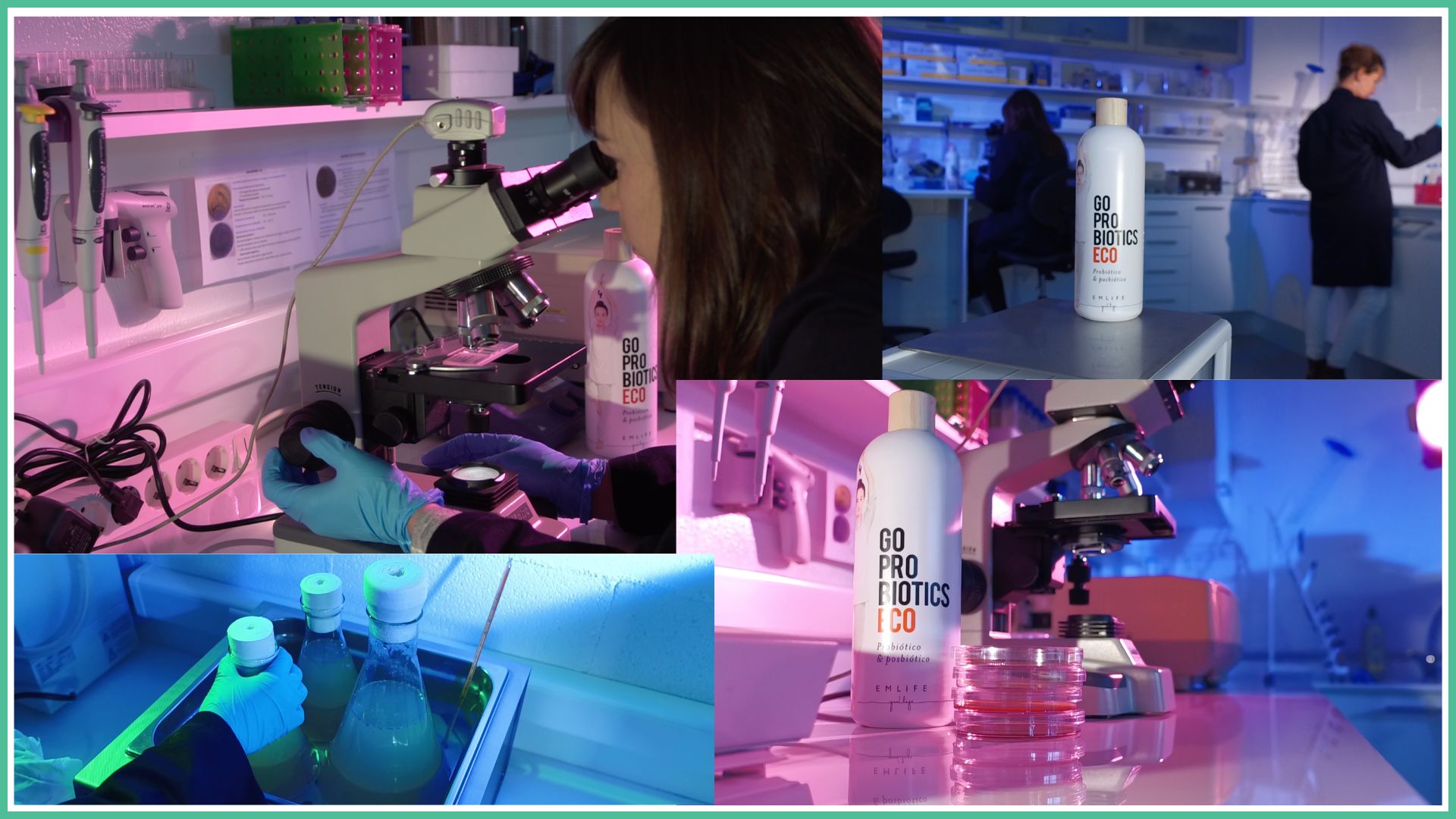
The proposed experiment will focus on the nutraceutical manufacturing sector, specifically the production of liquid probiotics at EMLIFE Biotics. This sector is characterized by complex fermentation processes, strict quality assurance requirements, and the need for highly trained operators. A key challenge is that much of the operational knowledge is fragmented: while around 20% of processes are already digitalized, another 60% remain in manual records, and approximately 20% are tacit knowledge not formally captured. The experiment aims to consolidate this expertise into a digital knowledge base and make it consumable through a Digital Intelligent Assistant (DIA) that supports employees across different stages of laboratory and production work.
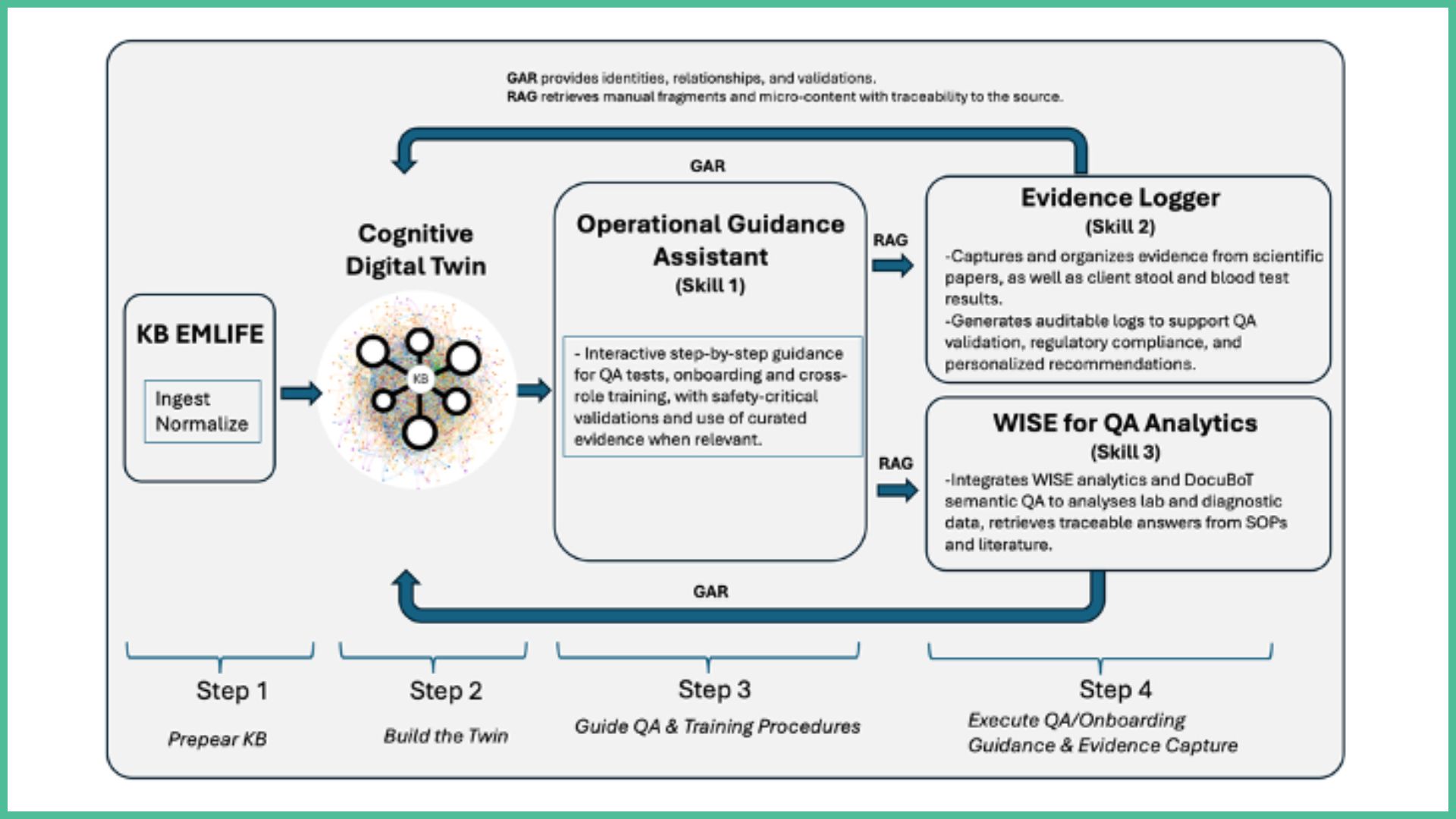
The processes and tasks supported by the Digital Intelligent Assistant include quality assurance activities, where laboratory operators receive guidance during microbiological and physicochemical testing, are reminded of critical steps, and are supported in reducing the risk of errors or omissions. The assistant also supports the onboarding of new employees by guiding new staff step by step through laboratory and production protocols, shortening the learning curve and ensuring consistent adherence to safety and quality standards. In addition, it facilitates cross-role training by supporting logistics and packaging workers (“Type A”) in transitioning to production-related roles (“Type B”), providing interactive guidance and contextual operational knowledge.

The DIA will act as a supportive tool, not a replacement, empowering workers by making knowledge accessible in real time. For example, while formulations will remain based on standardized protocols, the assistant will provide contextual advice, highlight deviations, and suggest improvements, leaving final decisions to the human operator. By digitalizing and structuring EMLIFE’s production knowledge, the experiment will make it easier for
employees to access, apply, and share information in their daily work. This will strengthen quality control and reduce variability across production, while also accelerating the onboarding and reskilling of new staff. At the same time, the project safeguards tacit knowledge that could otherwise be lost, increasing the resilience of operations. In the long term, it will showcase how human-AI collaboration can enhance manufacturing, turning laboratory and production roles into positions that are more attractive, efficient, and sustainable.

EMLIFE operates in a nutraceutical manufacturing environment where production, laboratory testing, and quality assurance rely on a combination of documented procedures, manual records, and tacit knowledge accumulated through experience. While some processes are supported by Standard Operating Procedures (SOPs) and digital tools, a significant part of daily operations still depends on individual expertise, informal guidance, and fragmented information sources. This creates variability in execution and makes it difficult to ensure consistent knowledge transfer across teams.

One of the main challenges is related to onboarding and workforce development. Training new employees requires intensive supervision by experienced staff, and the quality of onboarding may vary depending on who delivers it. As a result, the learning curve is long, productivity is reduced during training periods, and the risk of procedural errors is higher. In parallel, internal mobility between packaging, production, and laboratory roles is limited due to the complexity of processes and the absence of structured, guided learning pathways.

Quality assurance and traceability represent another critical challenge. The production of live probiotic formulations requires strict compliance with Good Manufacturing Practice (GMP) standards and Hazard Analysis and Critical Control Points (HACCP) food safety systems, as well as accurate documentation of microbiological and physicochemical tests. In practice, quality-related information is distributed across different systems, paper records, and personal knowledge, which increases the effort required to retrieve, validate, and reconcile data. This can affect audit readiness, traceability, and overall operational efficiency.

From a technical and data perspective, EMLIFE faces difficulties in consolidating heterogeneous information sources into a unified and reusable framework. Process parameters, scientific references, quality records, and inventory data are not fully integrated, limiting their use for real-time decision support. This fragmentation reduces the potential value of existing data and prevents systematic learning from past production batches.

These challenges directly affect competitiveness, scalability, and operational resilience. As the company grows, dependence on key individuals, manual processes, and fragmented knowledge increases business risk and limits the ability to adapt quickly to market and production demands. Addressing these issues through a structured, human-centric Digital Intelligent Assistant (DIA) is therefore essential to improve reliability, workforce sustainability, and long-term industrial performance.

Objective 1:

To build a structured and validated digital knowledge base that consolidates EMLIFE’s laboratory and production procedures, scientific references, and quality requirements into a single cognitive digital twin, making critical operational knowledge accessible, traceable, and reusable across teams.

Objective 2:

To develop and deploy a Digital Intelligent Assistant that provides real-time, context-aware guidance to operators during quality assurance, onboarding, and daily production activities, while preserving human responsibility and ensuring compliance with regulatory and safety standards.

Objective 3:

To validate the assistant in real production conditions and demonstrate its impact on workforce development, process reliability, and internal mobility, including the facilitation of cross-role transitions from packaging to production roles without disrupting plant operations.

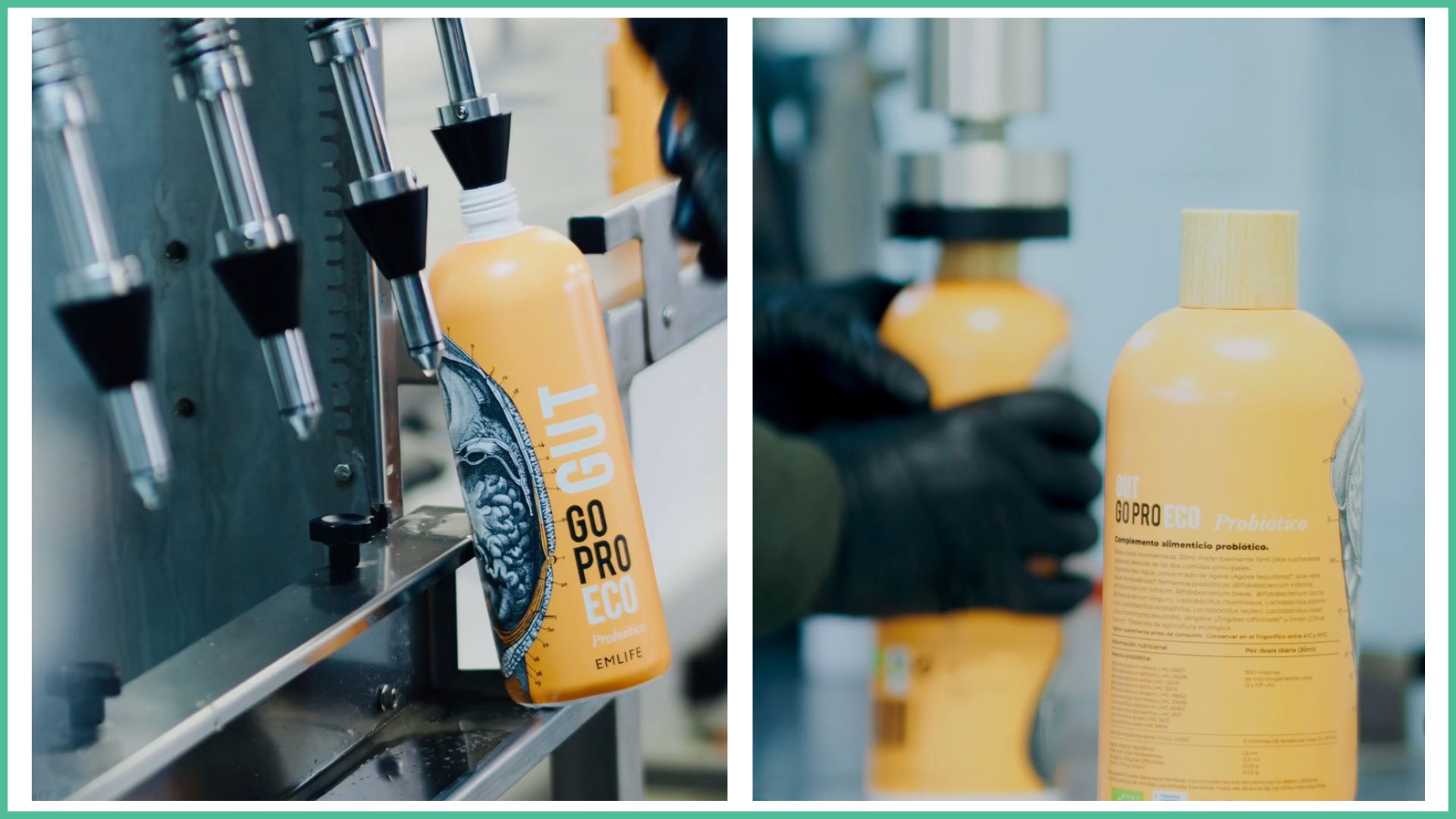
The PROBIO-AI experiment is carried out in the nutraceutical biotechnology sector, specifically in the manufacturing of liquid probiotic formulations based on live microbial cultures. The experiment takes place at EMLIFE’s production and laboratory facilities in Spain, within a real operational environment that includes fermentation processes, microbiological and physicochemical testing, bottling, and quality assurance activities. The project is implemented directly in day-to-day operations rather than in a simulated or isolated pilot setting, ensuring that results reflect practical industrial conditions.

The operational environment combines laboratory and production workflows, where strict coordination is required between testing activities, process monitoring, and quality validation. The assistant is deployed to support operators during routine and non-routine tasks, including quality checks, onboarding procedures, and cross-role training. Validation activities are conducted using real equipment, real production batches, and existing operational systems, allowing the experiment to assess usability and reliability under normal workload and time constraints.

The primary target users are laboratory technicians, production operators, and newly onboarded employees involved in fermentation, testing, and quality control. Secondary users include production supervisors and quality managers responsible for process validation and compliance. Relevant stakeholders also include technology providers, the Digital Innovation Hub, regulatory bodies, and professional partners who rely on EMLIFE’s compliance with quality and safety standards.

The experiment operates under established regulatory and operational constraints, including compliance with Good Manufacturing Practice (GMP) standards and Hazard Analysis and Critical Control Points (HACCP) food safety systems. Access to operational and quality data is governed by internal policies and data protection regulations, including pseudonymisation and controlled access rights. Integration with existing documentation systems, quality records, and inventory tools is required to ensure continuity of operations and avoid disruption of certified processes. These constraints shape the technical design of the assistant and ensure that innovation is compatible with certified industrial environments.

EXPECTED IMPACT

EXPECTED IMPACT

The PROBIO-AI experiment is expected to generate measurable operational, organisational, and strategic impacts for EMLIFE and its wider ecosystem. For end users, including laboratory technicians and production operators, the assistant will improve daily work conditions by providing reliable, contextual guidance during quality assurance, onboarding, and production activities. This is expected to reduce uncertainty, lower cognitive workload, and increase confidence when performing complex or safety-critical procedures. Success will be reflected in higher user adoption rates, reduced dependency on informal supervision, and faster attainment of operational autonomy by new employees.

From an operational perspective, the experiment is expected to improve process reliability and product quality by reducing information-related deviations, omissions, and inconsistencies. Targets include a reduction of at least 50% in errors linked to outdated or incomplete process information, a minimum of 95% traceability coverage across batches, and an improvement in inventory visibility and accuracy above 95%. These outcomes will be monitored through quality records, audit reports, and system usage logs.

Workforce development represents another key area of impact. By enabling structured onboarding and guided cross-role training, the experiment aims to reduce onboarding time by 30–40% and facilitate the transition of approximately 30% of packaging staff into production-related roles without disrupting plant operations. This contributes to greater organisational resilience and more sustainable workforce management.

In economic terms, improved efficiency, reduced rework, and lower training overheads are expected to contribute to cost savings and enhanced competitiveness. These benefits will be reflected in increased employee productivity, with a target improvement of 30–40%, and in shorter response times to audit and compliance requests, with an expected reduction of at least 70%.

The experiment also supports environmental and resource efficiency objectives. By reducing process deviations, material waste, and unnecessary repetitions of tests or batches, PROBIO-AI contributes indirectly to lower resource consumption and improved sustainability performance within the production process.

At ecosystem level, dissemination and visibility activities will ensure that project results reach relevant industrial and professional communities. A first impact target is the completion of the WASABI dissemination package by Month 12, including an experiment summary, documented lessons learned, and links to the published skill, supported by URLs and submission confirmations. In parallel, the project aims to achieve publication readiness in the WASABI White Label Shop by Month 12, demonstrated through official listings, acceptance messages, or screenshots.

The consortium will also produce at least one open-access communication asset, such as a public blog post, webinar, or short educational video, linked to the project’s dissemination plan and published with verifiable dates and links. In addition, at least one structured professional outreach action will be carried out towards relevant food, biotechnology, and healthcare communities, supported by agendas, invitations, or communication records.

Project visibility will be reinforced through milestone-based communication on LinkedIn, with four posts published at key stages: project start (Month 1), technical overview (Month 3), progress update (Month 9), and final results communication (Month 12). These publications will be documented through post URLs, screenshots, and publication dates, ensuring traceability and alignment with the overall communication strategy.

Overall, the success of PROBIO-AI will be assessed through a combination of technical performance indicators, workforce-related metrics, quality and compliance outcomes, and dissemination results. This integrated approach ensures that the experiment delivers measurable, sustainable, and transferable value for EMLIFE, the WASABI ecosystem, and other manufacturing SMEs.